
The community wireless networks of the Equitable Internet Initiative (EII) support neighborhoods to be self-determined, safe, and resilient, especially in the midst of a natural or political disaster. We believe that increasing resiliency means building and deepening relationships, so we can draw upon those relationships to develop creative solutions in times of change and uncertainty. As part of our focus on community-based infrastructure, we build and maintain solar charging stations in our Equitable Internet Initiative neighborhoods. These stations are part of a 4-part resilient strategy that utilizes the human and technical infrastructure of the EII networks.
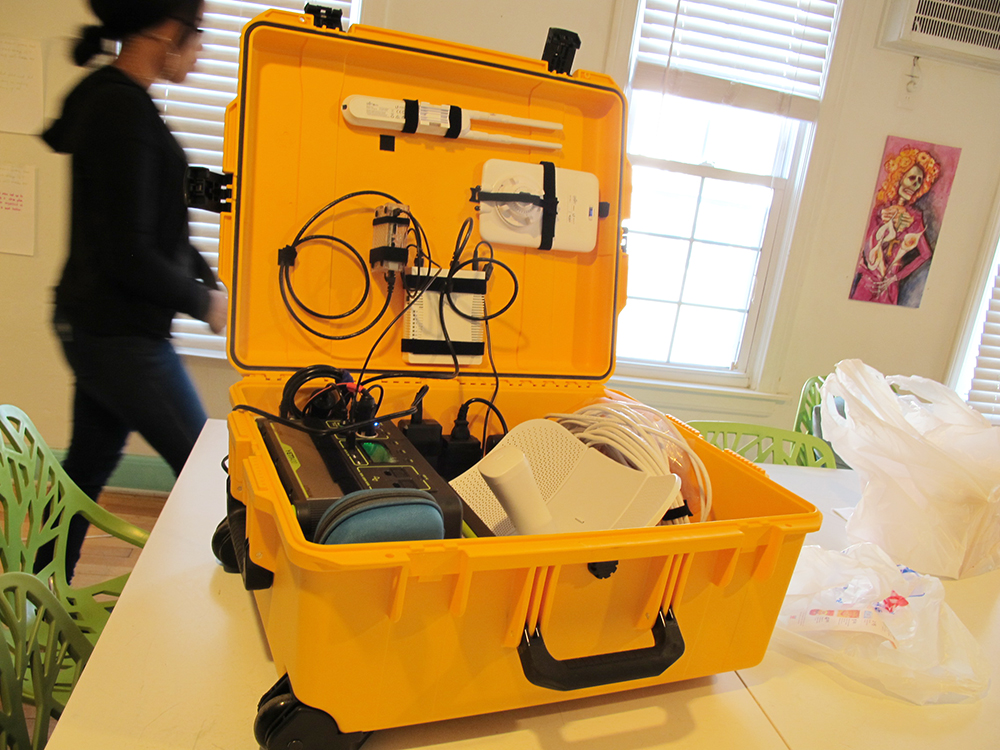
Portable Network Kits (PNKs)
To ensure the signal reaches the maximum number of people, we developed a series of Portable Network Kits (PNKs) that extend the network signal. Combining multiple PNKs creates a series of concentric circles that can blanket an entire neighborhood with a wireless signal. It creates an autonomous communications system and, if there is an Internet connection, a Wi-Fi hotspot. With or without an Internet connection, the PNKs act as a portal to an intranet with local applications. These kits will be able to run up to 24 hours before needing to be recharged. Solar charging stations are placed throughout each EII neighborhood to allow for recharging.
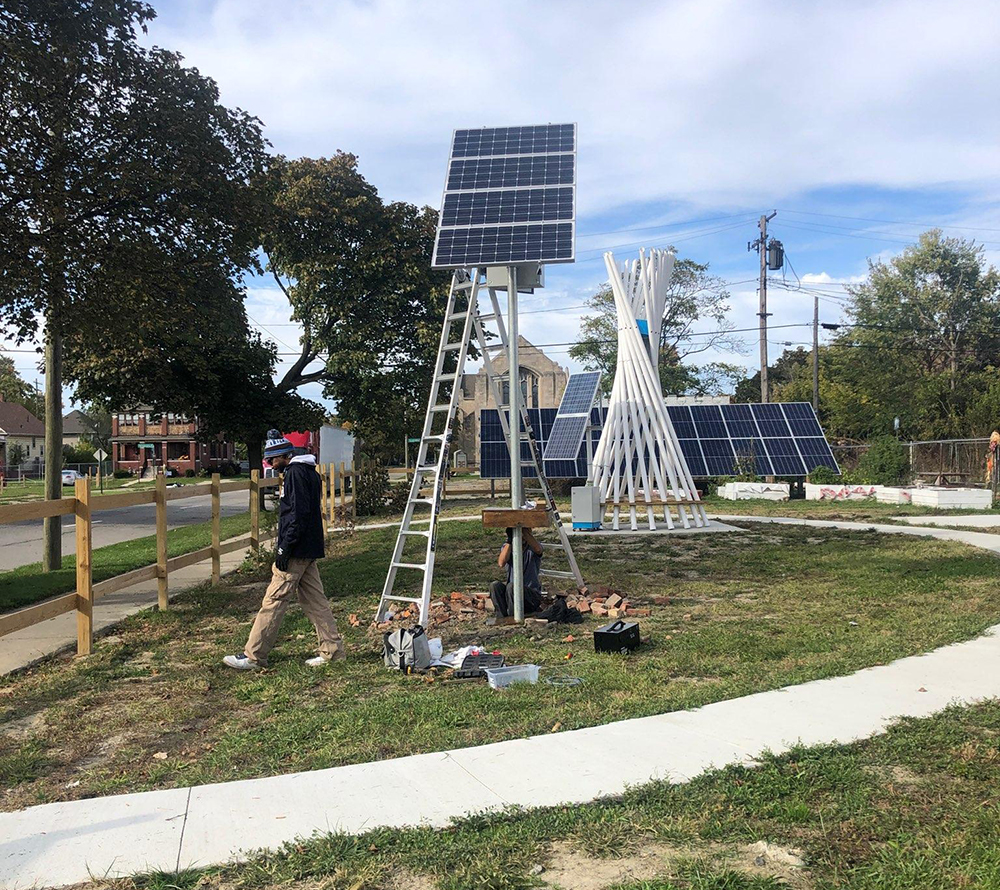
Solar
To access the EII network, community members need a device. We build solar charging stations, called Community Power Stations, that are also public hotspots. Each hub will allow residents to access the following: electricity to charge their devices, maps with the location of resources, emergency preparedness plans and contacts, an explanation of the resiliency network, and an EII intranet connection. We strategically place these throughout the neighborhoods, in public parks and community centers, allowing people to keep their devices charged. Each of the stations can operate for 3- 5 days without a solar charge, to allow for the low light during Michigan winters.
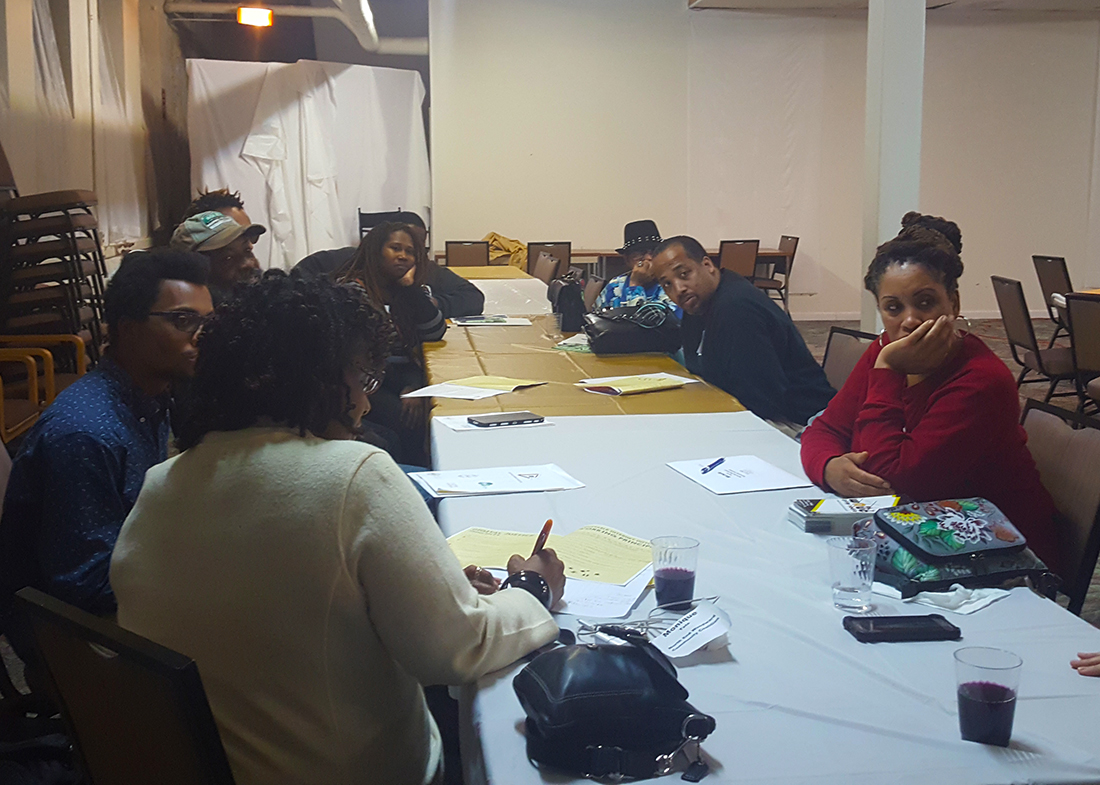 Community Preparedness Planning
We believe the key to sustaining a community network is fostering community ownership. Emergency preparedness plans, designed by EII Digital Stewards and the network users, are available at each charging station. These plans describe how to activate the neighborhood resiliency network during an emergency. They will include directions on how to activate PNK kits and access the intranet applications. The intranet hosts applications on a local server, including but not limited to a map of resources (based on the one created by our Next Gen Apps students), a chat application, file sharing, and music box - a community radio and storytelling app. Digital Stewards in each neighborhood design the network architecture with local partners who agree to be a part of resiliency planning.
3-Day Battery Backup System
Our networks each have a battery backup system that will keep key parts of our networks functioning during power outages. This signal allows people to access the intranet and use local applications to communicate, organize, and distribute resources in an emergency.